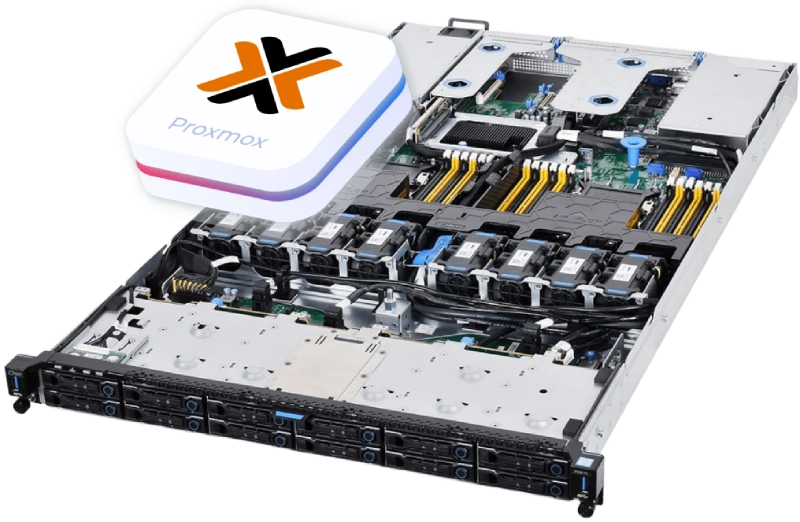


Yes. Proxmox VE (8.1+) features a Native ESXi Import Wizard. You can connect directly to your vCenter or ESXi API and live-import VMs without the hassle of manual OVA/OVF exports. With Broadcom's recent pricing changes, many enterprises are executing a "VMware Exodus." ServerMO provides the raw bare metal performance you need to execute this migration seamlessly without losing data or configurations.
Never place a Hardware RAID controller between ZFS and your SSDs. Hardware RAID blinds the ZFS self-healing mechanism and breaks its ability to perform accurate checksum validations. At ServerMO, we provision Enterprise NVMe via direct PCIe lanes or HBA cards in IT Mode, giving Proxmox 100% block-level control.
By design, ZFS is inherently write-intensive due to its Copy-on-Write (CoW) architecture, which quickly depletes the lifespan of standard consumer-grade SSDs (low TBW). ServerMO exclusively uses Enterprise Datacenter NVMe SSDs with extremely high Terabytes Written (TBW) endurance and Power Loss Protection (PLP) to guarantee the long-term stability of your Proxmox pools.
Ceph storage requires massive throughput and ultra-low latency. Trying to run Ceph OSD replication over a standard 1Gbps connection will result in network saturation and cluster collapse. ServerMO provides dedicated 10Gbps unmetered Private VLANs exclusively for your Ceph backend traffic, ensuring lightning-fast replication.
A Proxmox High Availability (HA) cluster requires a strict minimum of 3 servers to establish a quorum. Building a 2-node HA cluster risks a "Split-Brain" scenario where both servers try to seize control if the network drops. ServerMO architects safe 3+ node clusters or integrates lightweight QDevices to ensure safe failovers.
Yes. Running Proxmox ZFS on non-ECC RAM is a severe data corruption risk. If a bit flips in memory, ZFS will write that corrupted data to disk. ServerMO deploys DDR4/DDR5 ECC Memory on all Proxmox bare metal servers. By default, ZFS ARC dynamically utilizes up to 50% of the host's RAM for lightning-fast caching, making massive ECC memory a critical foundation (1GB per 1TB is only required if ZFS Deduplication is enabled).